
Logistics: the paper trail is the bottleneck
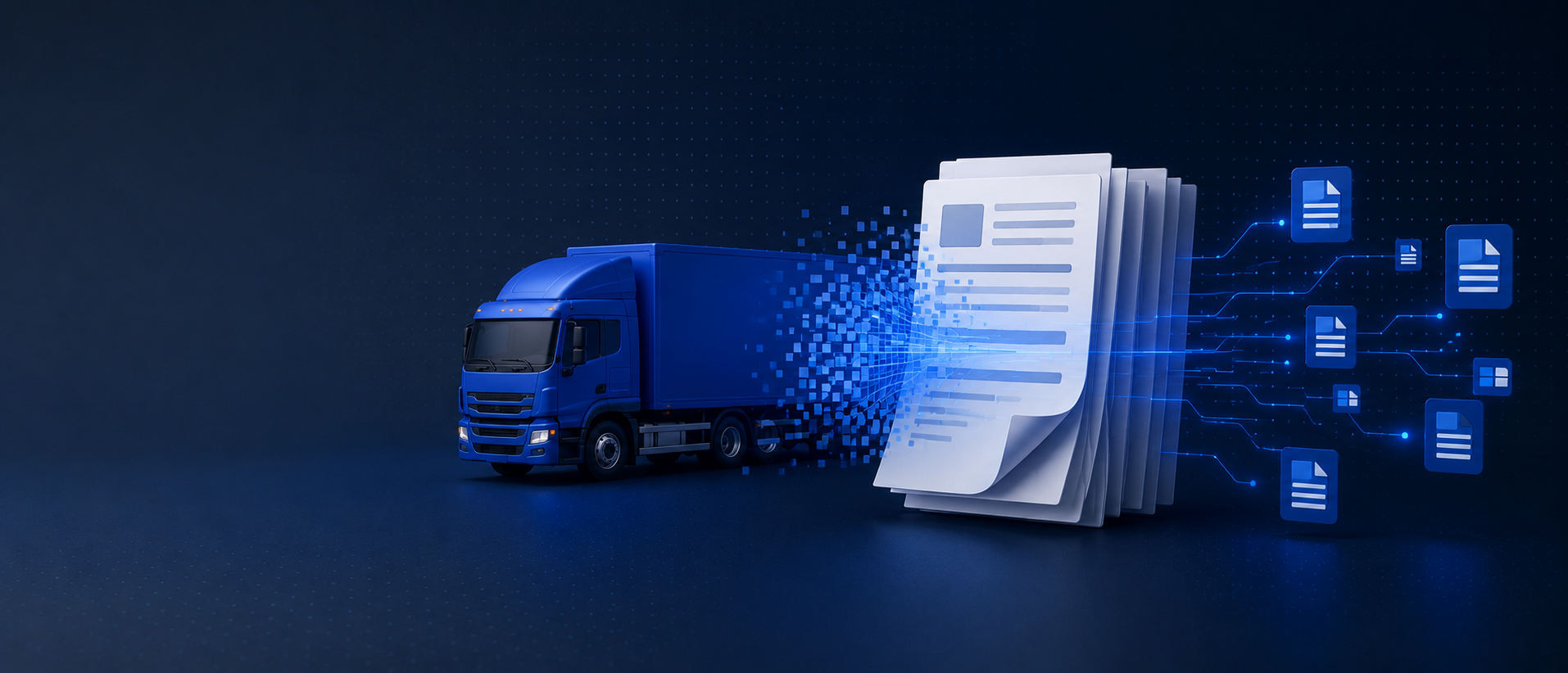
Logistics operations obsess over rolling assets, yet the friction that erodes margin usually sits in the office: documents. Consignment notes, customs declarations, proofs of delivery, and the endless where-is-my-shipment correspondence around them.
The document grind
A single shipment can generate a dozen documents, most arriving as scans, photos or PDFs of wildly varying quality. Staff retype reference numbers, match documents to orders and chase the missing ones. It is high-volume, rule-based work performed under time pressure: the automation profile in its purest form.
Extract, validate, route
Modern extraction reads the scans and photos, pulls references, dates and amounts, validates them against the order, and routes only the genuinely unreadable to a human. Matching a POD to an invoice stops being a job and becomes a log entry.
Status without the inbox
The other half of the grind is outbound: customers asking for status, staff copying it from one screen into an e-mail. A status portal or automated notifications remove the entire loop. Dispatchers stop being human APIs.
The compounding effect
Digitalized documents create structured data, structured data feeds reliable dashboards, and reliable dashboards reveal the next bottleneck. The paper trail is not just a cost; cleaned up, it becomes the data foundation the rest of the digitalization runs on.
- Document handling, not transport, is where logistics margins leak.
- Extraction plus validation automates the bulk of CMR and POD processing.
- Customer status self-service removes the most frequent inbound calls.
- Dispatchers should manage exceptions, not paperwork.
Rather discuss your case than read about others?
The intro call is fifteen minutes and tailored from the first sentence.